
Written by the Token Tails team. Facts checked against live data on ; sources are listed at the end.
A legitimate animal rescue is registered (or can show who runs it), easy to reach, open about its animals and its money, and consistent across its own website and social accounts. A scam usually fails at least one of those, and it almost always pushes you to pay fast, in a way you cannot undo.
Here are eight checks to run before you give money or take an animal home. Most take a minute or two.
Key takeaways
- Look the rescue up in the official register for its country before you give.
- Its website, social accounts, address and phone number should all match.
- A real rescue welcomes a visit or a video call, and wants to know you are a good match for the animal.
- Pressure to pay now, and only by crypto, gift card, wire transfer or payment app, is a red flag regulators warn about.
- Good rescues publish where the money goes. Check that totals are labelled honestly.
1. Check the official register
Most countries keep a public register of charities or non-profits. Search the rescue’s exact name and, if it gives one, its registration number.
- England and Wales: the Charity Commission register. Most charities with an income of £5,000 or more a year must be registered (GOV.UK).
- United States: the IRS Tax Exempt Organization Search, plus ratings from Charity Navigator. The FTC also suggests the BBB Wise Giving Alliance and CharityWatch (FTC).
- Lithuania: the register of legal entities run by Registrų centras.
Small rescues are not always registered. That is not proof of a scam, but it means the other seven checks matter more.
2. Make sure its own channels match
Open the rescue’s website and its social accounts side by side. The name, address, phone number and the animals should be the same everywhere, and the posts should be recent. Watch for names that sound like a well-known organisation but are spelled slightly differently: the FTC warns that scammers use names that sound a lot like the names of real charities (FTC).
3. Look for a clear mission and policies
A real rescue can tell you what it does and how: which animals it takes, whether animals are vaccinated, neutered and microchipped before they go home, what the rehoming fee covers, and what happens if a placement does not work out. Vague answers to simple questions are a warning sign.
4. Look at the animals, not just the photos
Real rescues usually have a mix of ages and types, including older, shy or plain-looking animals. Be wary of a “rescue” that only ever has young, fashionable or purebred animals at bargain prices. The FTC points out that scam ads often offer purebred puppies for a few hundred dollars when they often cost thousands, and suggests searching the seller’s name with words like “review”, “scam” or “complaint” before you pay (FTC).
5. Ask to visit or video call
Legitimate rescues want to meet you, because they want the animal to go to the right home. If a rescue will not let you visit, will not video call, or will not even talk on the phone, move on. The same goes if it offers to ship an animal to you before you have met.
6. Check how the money is reported
Registered charities file accounts, and many rescues publish yearly reports or monthly updates with vet bills and receipts. Ask what your gift will pay for, and whether you will get a receipt. A rescue that cannot say where money goes, or only ever posts emergencies, deserves a closer look.
7. Watch for pressure and one-way payments
This is a common scam signal. The FTC warns that only scammers say you must pay with gift cards, a payment app, cryptocurrency or a wire transfer, because that money is hard to get back, and that they rush you to decide (FTC). A common version: someone calls claiming to be from a shelter, says your pet was hurt, and demands an urgent payment. Hang up and call the shelter yourself on a number you looked up (FTC).
Never give in to “pay in the next hour or the animal is put down”. A genuine rescue will let you check first.
8. Online giving you can trace
Giving online is fine when the payment leaves a trail you can follow:
- Cards and bank transfers to the rescue’s own account give you a record and, often, a way to dispute the charge.
- Crowdfunding pages should name the organiser and the beneficiary. Ideally the money goes to the rescue or the vet directly.
- Crypto is only traceable when the rescue itself publishes the receiving address on its own channels and you can look up the payment. Our step-by-step guide on how to verify a crypto donation shows how.
If you cannot tell who ends up with the money, give somewhere you can.
A worked example: how we disclose Pink Paw’s payouts
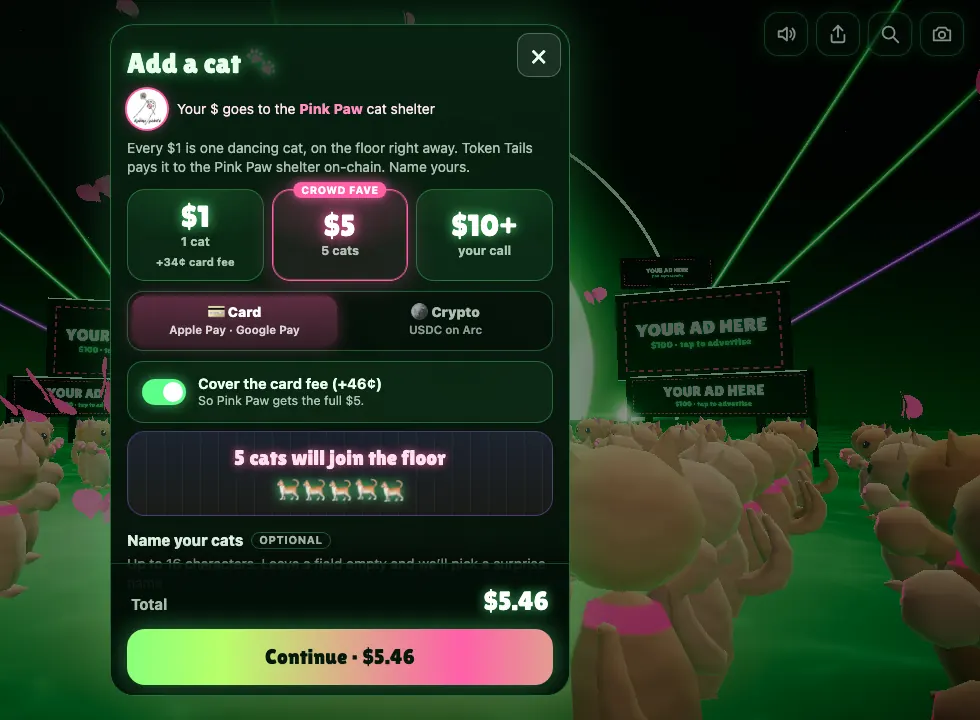
We are not neutral here: Token Tails works with Pink Paw (Rožinė pėdutė), a cat shelter in Kaunas, Lithuania, and sends it payouts tied to its games. So instead of asking you to trust us, here is what we publish, as an example of the disclosure to look for anywhere.
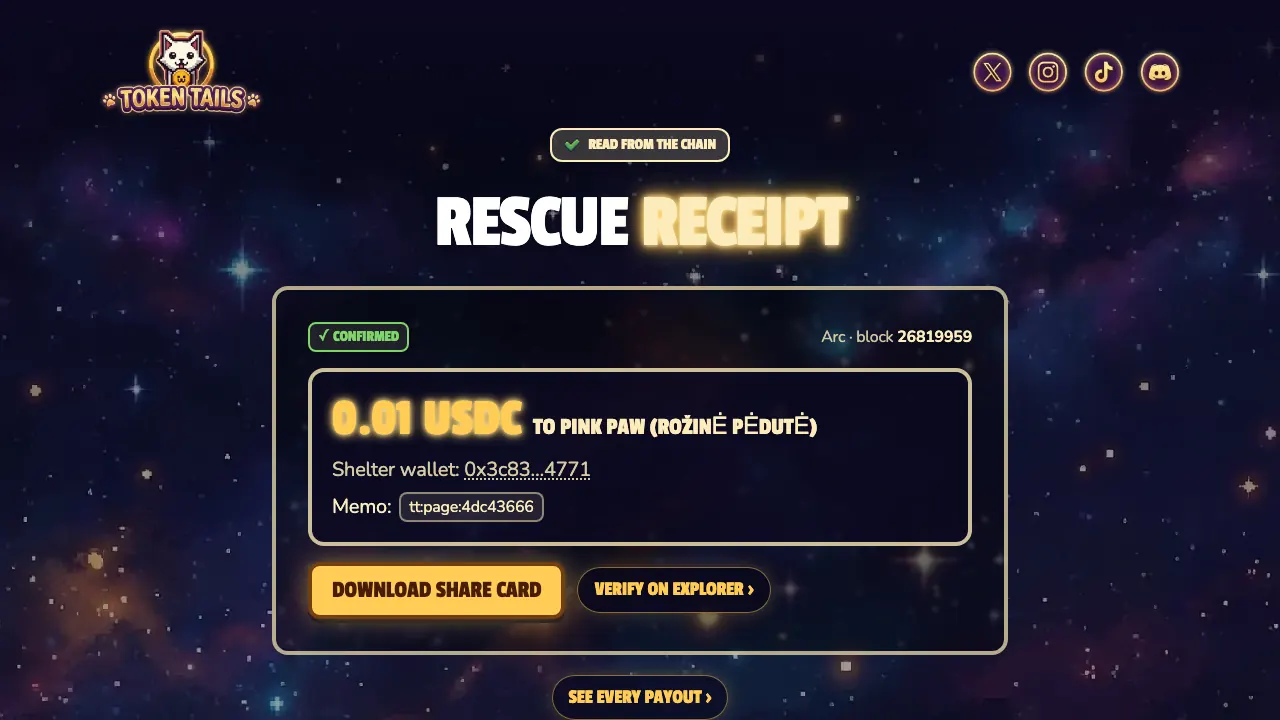
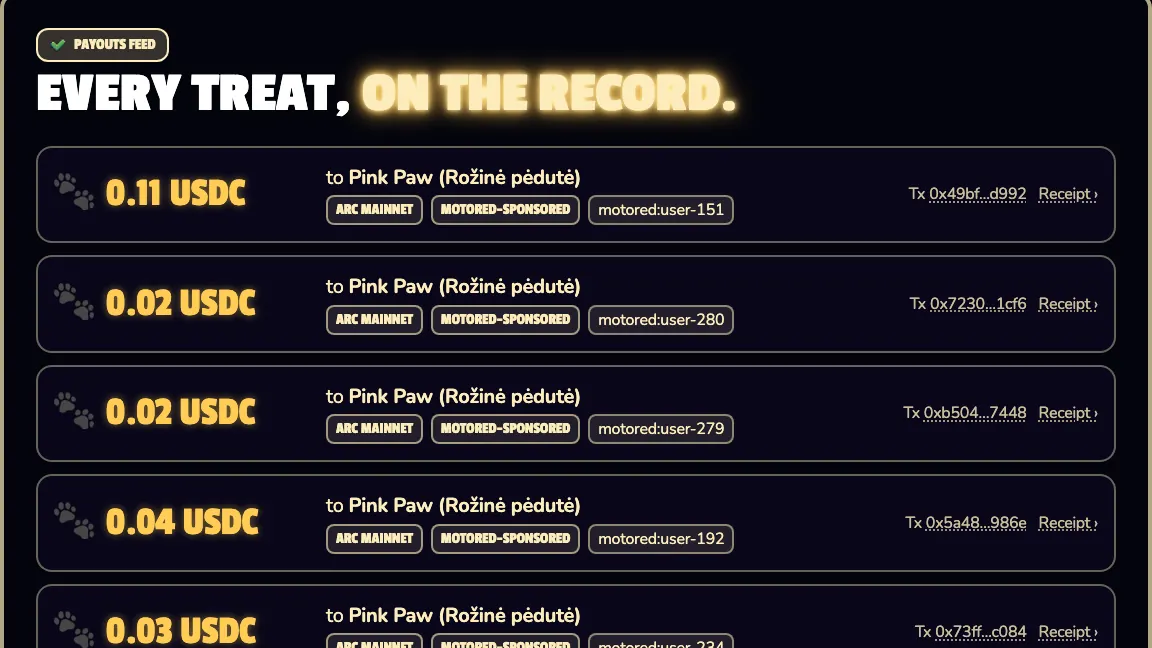
- Every payout is public. The shelter payouts page lists each payout to Pink Paw with its date, its coin and a link to the transaction. Coins are listed separately, never added into one figure.
- Custody is stated. Since 16 October 2026, payouts go to Pink Paw’s own wallet. Token Tails created it, Pink Paw’s staff hold the recovery phrase, and Token Tails keeps a recovery backup. Earlier payouts went to a wallet Token Tails held for the shelter, and the impact page labels those separately.
- Related-party money is labelled. Many payouts are sponsor gifts from Motored, a company owned by Token Tails’ founder. Each one is marked MOTORED-SPONSORED, because sponsor money from a related company is not the same as support from the public.
- Unverifiable figures say so. “$40K+ donated directly in crypto and goods (Oct 2026, company-reported)” is shown as COMPANY-REPORTED and kept out of the on-chain totals, because you cannot check it on-chain.
- We do not claim what the money bought. A payout proves a transfer, not an outcome. What Pink Paw spends it on has to come from the shelter.
Hold any rescue or platform to the same standard: who holds the money, who paid it, and what you can check yourself. Before giving to any shelter abroad, our guide on how to donate to a cat shelter online covers the cheapest ways to pay, and you can read more about Pink Paw, the cat shelter in Kaunas.
Short on money? Help for free
If you cannot give right now, there is plenty you can do: share a verified rescue’s animals, volunteer, or foster. See 12 free ways to help animal shelters.
Frequently asked questions
What if a rescue is not a registered charity?
Small rescues are not always registered. In England and Wales, for example, most charities must register once their income reaches £5,000 a year. An unregistered rescue can be genuine, but lean harder on the other checks: a real address, people you can talk to, animals you can meet, and receipts for what you give.
Is a GoFundMe for a rescue animal legit?
It can be, but a personal fundraiser is not a charity. Check who organises it, who receives the money (ideally the vet or rescue directly) and whether updates follow. GoFundMe's Giving Guarantee lets donors claim for misuse against the stated purpose for one year after donating.
How do I report a fake animal rescue?
In the US, report it at ReportFraud.ftc.gov and to your state charity regulator (find it at nasconet.org). In the UK, the Charity Commission points people to Action Fraud. Elsewhere, contact the police or your country's charity regulator, and report the page to the platform it is on.
Is a rescue that takes crypto a scam?
Not by itself, but the US Federal Trade Commission warns that scammers often insist on crypto, gift cards, wire transfers or payment apps because the money is hard to get back. A real rescue offers ordinary ways to pay too, and publishes any crypto address on its own channels.
Check it yourself
Facts checked against live data on . Live figures change: the links below always show the current ones.
- FTC: Getting a pet? Avoid scams (Dec 2024)(opens in a new tab)
- FTC: Donating safely and avoiding scams(opens in a new tab)
- FTC: Scammers posing as SPCA and animal welfare staff (Jun 2025)(opens in a new tab)
- Charity Commission: register of charities(opens in a new tab)
- Charity Commission and Fundraising Regulator: safe giving advice (Nov 2023)(opens in a new tab)
- Charity Navigator(opens in a new tab)
- Registrų centras: Lithuanian register of legal entities(opens in a new tab)
- GoFundMe Giving Guarantee(opens in a new tab)
- Token Tails shelter payouts (live)
- Impact: totals with dates and sources
- The open-source payout contracts (MIT)(opens in a new tab)