

Written by the Token Tails team. Facts checked against live data on ; sources are listed at the end.
Many cat shelters say money helps most, because it pays for vet care, sterilisation and whatever runs out that week. After that, they need the food and litter they already use, cleaning supplies, and people’s time. The best first step is always the same: ask the shelter what it needs right now.
Here is what usually tops the list, and how to give in a way that helps rather than adds work.
Key takeaways
- Money is the most flexible gift: it covers vet bills and sterilisation, which goods cannot.
- Match supplies to the shelter’s own wish list; many accept only unopened food.
- Cleaning supplies, litter and laundry items run out constantly.
- Time counts: volunteering and fostering free up staff.
- You can give to a shelter in another country online, and on some platforms check the payout yourself.
Money vs goods: what helps most and why
Goods feel more personal, but money is usually the bigger help:
- It goes where the need is. One week it is a vet bill, the next it is heating or a broken washing machine. Only cash covers all of those.
- It pays for vet care and sterilisation. These are often a shelter’s biggest costs, and you cannot donate a surgery in a bag.
- It buys the right thing. Shelters know which food suits a kitten, a senior cat or a cat on a kidney diet. They often get better prices buying in bulk.
- It saves time. Every donated bag has to be sorted, checked and stored. Money needs none of that.
The ASPCA puts both on its list of ways to help: shelters “always appreciate donations of vital supplies,” and funds “can make a world of difference for your local shelter” (ASPCA).
The usual cat shelter wish list
If you want to give goods, these are the items shelters most often ask for. Check with the shelter first; brands and types matter.
Food
- Unopened dry and wet cat food, ideally the brand the shelter already feeds (a sudden change upsets cats’ stomachs).
- Kitten food and kitten milk replacer, in spring and summer especially.
- Special diets only if the shelter asks for them.
Litter and hygiene
- Cat litter of the type the shelter uses (clumping, wood pellets or silica: ask).
- Litter trays and scoops.
- Puppy pads or newspaper for kittens and sick cats.
Cleaning
- Bleach or the disinfectant the shelter uses, washing powder, bin bags, paper towels, disposable gloves.
Comfort
- Clean towels and fleece blankets in good condition.
- Scratching posts, simple toys, carriers and cat beds.
The ASPCA’s advice is simple: “Call ahead or check their social media to see what items are most in demand” (ASPCA). Many shelters post a wish list or an online shop list you can buy from directly.
Vet care and sterilisation
Vet care is where much of a shelter’s money goes. Cats arrive with injuries, infections, parasites or no vaccinations, and most need sterilising before they can be rehomed or returned outside.
Sterilisation also matters beyond the shelter’s walls. Trap-neuter-return with ongoing monitoring (TNRM), which sterilises, vaccinates and returns outdoor cats and then keeps an eye on the colony, is described by the ASPCA as “the most humane, efficient way of stabilizing community cat populations” (ASPCA). If preventing future strays matters to you, ask the shelter whether sterilisation or TNR is part of its work.
Time: volunteering and fostering
Not every gift is money or goods.
- Volunteering: cleaning, feeding, laundry, socialising shy cats, driving cats to the vet, taking good photos for rehoming posts, or helping with a fundraiser.
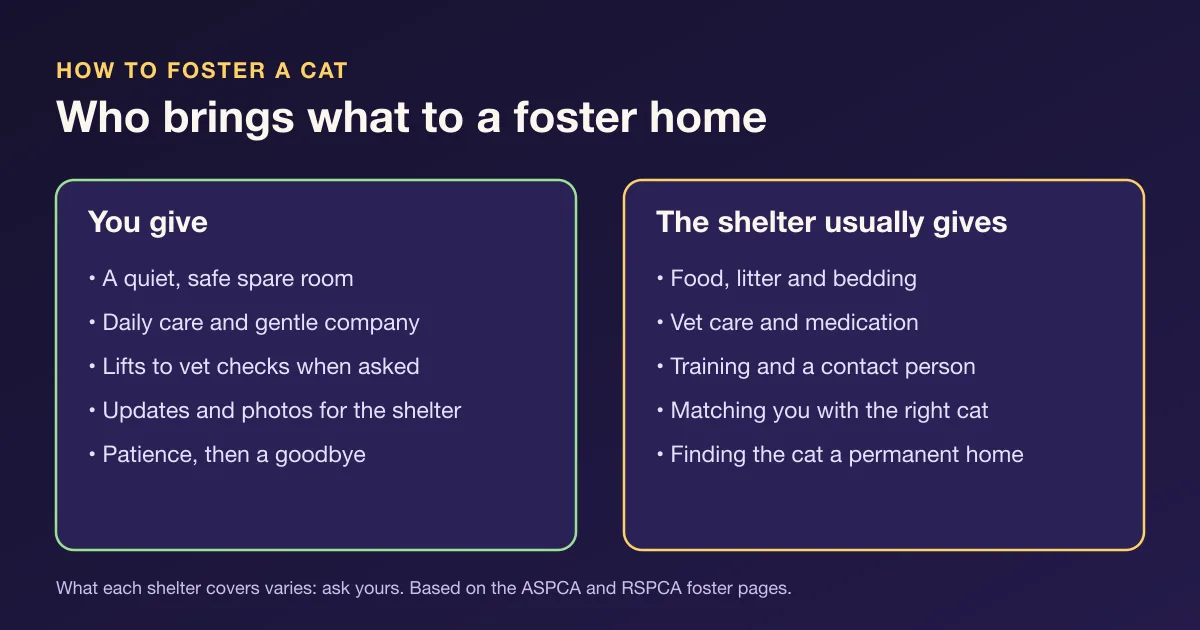
- Fostering: a foster home gives a cat, a mother with kittens or a cat recovering from surgery a quiet place outside the shelter, and frees a space for the next one.
- Skills: design, translation, accounting, social media or repairs can save a small shelter real money.
Looking to give a shelter cat a home? Contact your local shelter; they run their own rehoming.
Helping a shelter in another country
You do not have to live near a shelter to help it. Online gifts reach small shelters anywhere, and some platforms let you check that the money arrived.
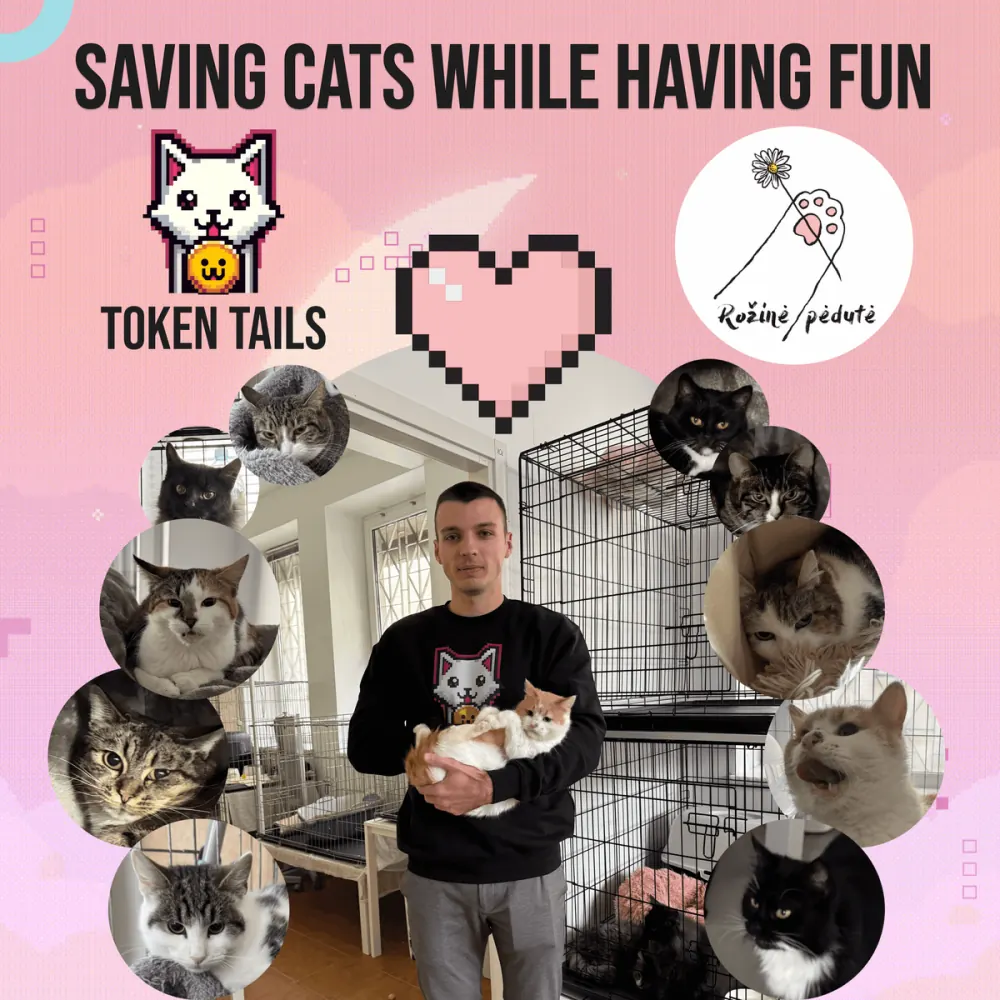
Pink Paw (Rožinė pėdutė) is a cat shelter in Kaunas, Lithuania. Two simple ways to help it from anywhere:
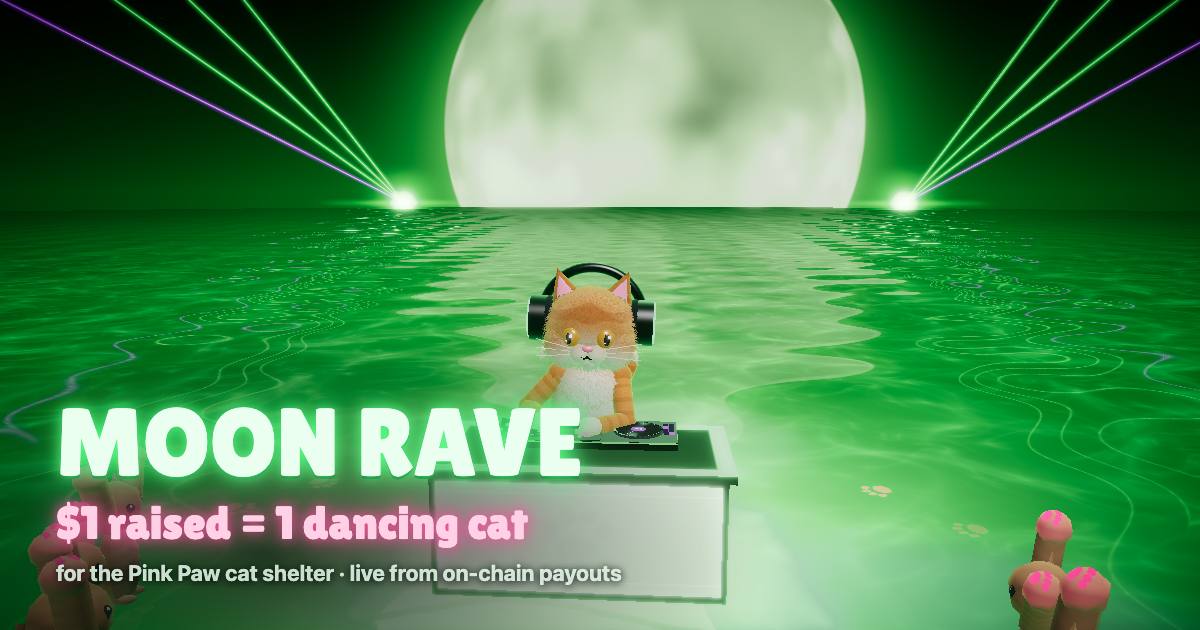
- $1 = 1 cat on Moon Rave. Add a dancing cat by card or in USDC on Arc. By card, Token Tails pays the full $1 out to Pink Paw on-chain; in USDC, the full $1 goes from your wallet straight to the Pink Paw split. Read more in Moon Rave, explained.
- A free treat. On the give page, tap once and Token Tails sends Pink Paw a small stablecoin treat (USDC, USDC.e or USDG, by network). It costs you nothing.
To learn more about the shelter itself, read Pink Paw, a cat shelter in Kaunas.
How to see your gift arrive
When you give through a big charity, you usually trust its annual report. With on-chain payouts you can check each one yourself.
Every payout to Pink Paw through Token Tails’ open-source ShelterSplit contract appears on the public shelter payouts page, with a link to its transaction on the explorer. If you have never checked a transaction before, our guide on how to verify a crypto donation walks through one real payout step by step.
Live from the payout ledger
For more ways to help cats outside a shelter, see how to help stray cats. For help that costs nothing, see free ways to help animal shelters, and if you have a spare room, read how to foster a cat.
Frequently asked questions
What do cat shelters need the most?
Many shelters say money is their biggest need, because it pays for vet care and sterilisation and can go wherever the need is that week. After that: the food and litter they already use, cleaning supplies, and volunteers.
Is it better to donate money or supplies to a cat shelter?
Money is usually more flexible, since the shelter can buy exactly what it needs, often at better prices. Supplies help most when they match the shelter's own wish list, so ask first.
Can I donate opened cat food or used items?
Many shelters accept only unopened food, and used blankets or towels only in good, clean condition. Every shelter has its own rules, so call or check their page before you drop anything off.
How can I help a cat shelter in another country?
Give online. For example, anyone can give $1 to Pink Paw in Kaunas, Lithuania, on Moon Rave by card or in USDC, and check the payout on the public shelter payouts page.
Check it yourself
Facts checked against live data on . Live figures change: the links below always show the current ones.